Before anyone comes to site
What we need from your site, and what your site gets from us
The paperwork, and when it arrives
A method statement and a risk assessment specific to your site are sent before the visit, not handed over at the gate. They cover the take off area, the flight plan, the cordon, the people involved and what happens if conditions change. If your approval process needs them in a particular format, say so early and they will be produced that way.
The insurance certificate goes with them on request. Commercial cover is held through Coverdrone, and most contractor approval systems want to see it before a purchase order is raised rather than after.
Where your site runs its own induction, permit to work or contractor approval process, that is completed ahead of the date. A two hour weather window is not the moment to start a site induction, and treating it as one is how a good forecast gets wasted.
What the take off area actually needs
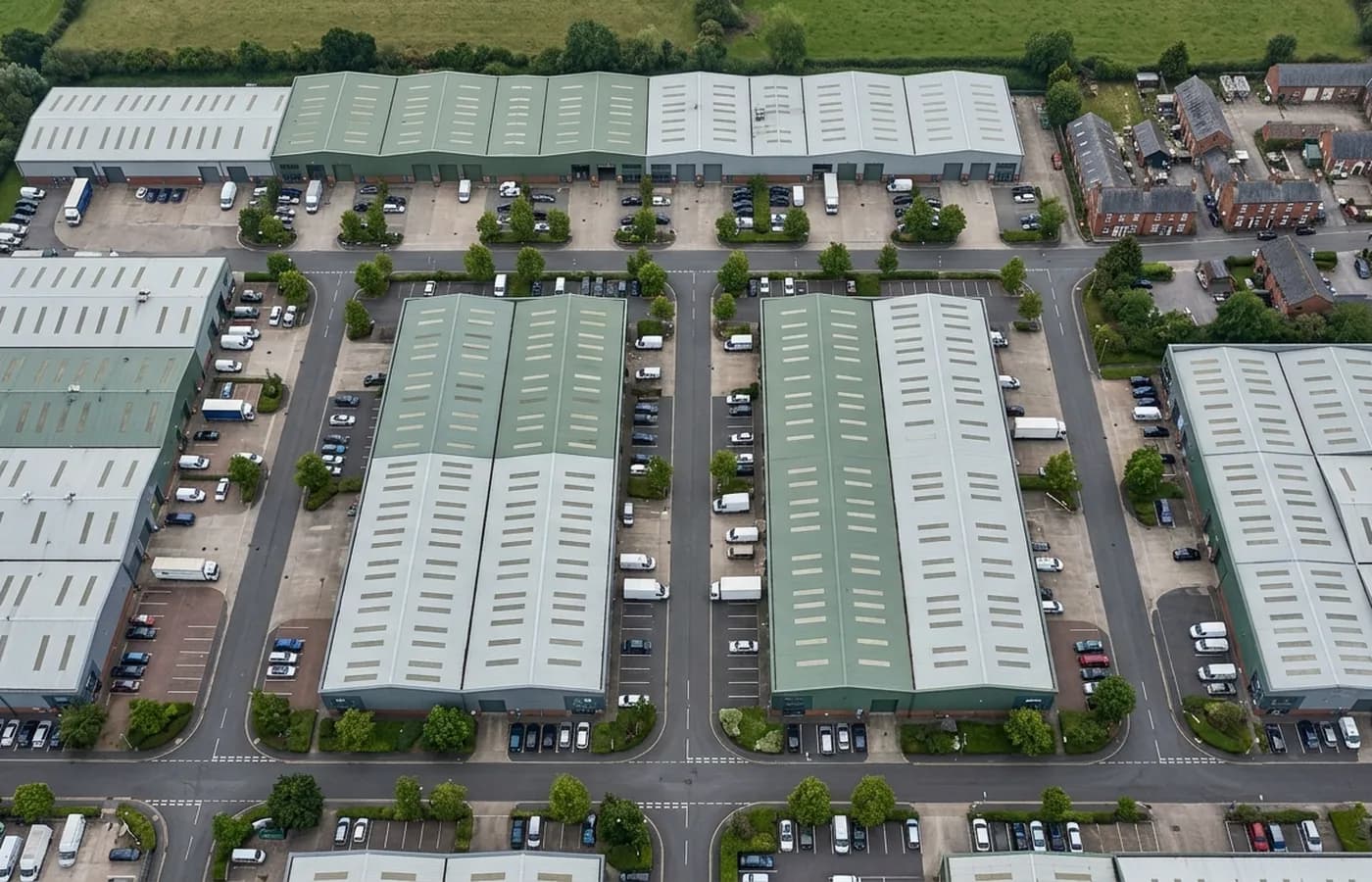
A few square metres of firm level ground, away from the main traffic route, with a reasonable view of the building. Hard standing is preferred; a corner of a yard, a section of car park or a loading bay set aside for an hour will all do. Cones mark it out and one person stays with it throughout.
It does not need to be next to the building. Standoff is often better, and a position across a yard or on an adjoining area can give a cleaner set of photographs than one directly beneath the elevation.
Where the only workable position is somewhere you would rather not lose for the morning, a short defined window is agreed instead. Most single buildings are done inside two hours from setting up to packing away.
Occupied units, public areas and other people
Tenants keep trading throughout. Nothing is leaned against the building, nobody walks the roof, and no access equipment arrives. The usual courtesy is a short note to occupiers a few days before so they know what the aircraft is and why it is there, which prevents the calls that otherwise reach a helpdesk.
The A2 Certificate of Competency governs how close the aircraft may legally be flown to people who are not part of the operation. In practice that means one of two approaches on a busy site: either a short window with a defined area kept clear, agreed with you in advance, or a greater standoff distance with the camera doing more of the work. Both are settled before the day.
Where a public footpath, a road or a neighbouring property is within the area that matters, the flight line and the take off position are planned around it. That planning happens at quoting stage, which is also when any location that cannot be flown at all gets identified.
Airspace, restrictions and the places we cannot go
Airspace is checked before a price is given, not on arrival. Restrictions around airports, some prisons, military sites and certain infrastructure are real and they are not negotiable on the day. Where a notification or a permission is needed, it is arranged first.
Some sites cannot be flown at all, or cannot be flown to a standard that would produce a report worth having. In that case you get told, with the reason, instead of being sold a visit that turns into a wasted morning for both sides.
Fragile roofs, plant and the things nobody mentions
One of the practical arguments for inspecting from the air is that fragile roof coverings and roof lights are a leading cause of serious falls in this country, and a great deal of older industrial stock in the South West is exactly that construction. An aircraft removes the question entirely, because nobody is on the roof.
It helps to know in advance what is up there, though. Lightning protection systems, fragile rooflight runs, solar arrays, mast or antenna installations and anything with a safety exclusion around it are all worth mentioning at scoping stage, because they change what gets photographed and how close the aircraft works.
What stops a flight, and what happens then
Wind, rain and light. The aircraft handle more wind than the photographs do, and close range work near a structure needs a settled aircraft to produce images sharp enough to be worth having. Heavy overcast flattens the detail that makes a hairline split visible; light rain makes surfaces read differently to how they actually are.
When the forecast is wrong for the job, the visit moves. You are told as early in the day as the forecast allows, rather than at the point somebody is already standing in your yard.
On the record
What your approval process will ask for
CAA registered
A registered operator with an Operator ID and a Flyer ID held, which is the baseline any commercial client should be asking for and the first thing to check on a quote.
A2 Certificate of Competency
The A2 CofC, not a GVC. That decides how close the aircraft may legally be flown to people and property, so it decides what can be inspected and how, and it is set out plainly rather than buried.
Insured with Coverdrone
Commercial cover through Coverdrone. A certificate can be sent across for a site file or a contractor approval pack before the visit is booked.
Report within 48 hours
Photographs and a written report per asset within 48 hours of the flight, so the file is closed while the visit is still fresh in everyone's mind.
See how a visit runs
Request a site quote with Drone Inspection Services
Tell us the site and the assets you need covered. Sam Hembury will come back with a fixed price, a method statement and a date.