Who turns up
One operator, a construction background, and paperwork you can check
Sam Hembury
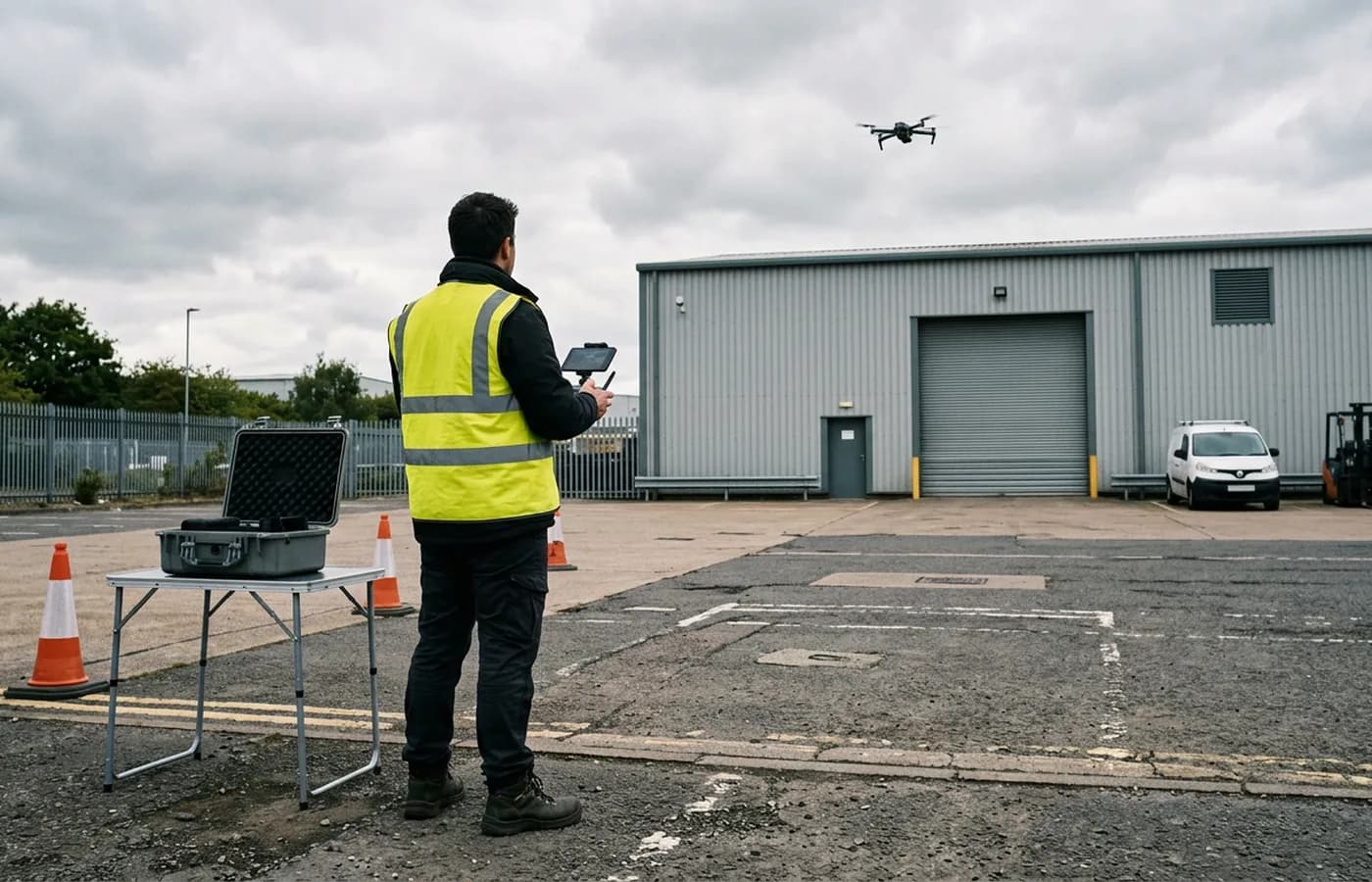
Sam flies every job on this site. There is no panel of subcontractors and no dispatch desk, so the person you speak to about scope is the person standing in your yard with the controller and the person who writes the report afterwards.
The background is construction rather than photography, which shapes what the camera gets pointed at. A contractor looks at a roof and reads the sequence: which lap failed first, which fixing let go after it, where the water went once it was in. That is a different set of photographs to the ones somebody takes because a building looks good from above, and it is the reason the reports are usable by the roofer who eventually prices the work.
The operating position is set out plainly rather than dressed up. A CAA registered operator with an Operator ID and a Flyer ID. An A2 Certificate of Competency, which is what governs how close the aircraft may be flown to people and property, and which is not a GVC. Commercial insurance through Coverdrone, with a certificate available for a site file or a contractor approval pack before anything is booked.
Two aircraft cover the work: a Mavic 4 Pro with a 100 megapixel Hasselblad camera for the visual detail, and a Mavic 2 Enterprise Advanced with a radiometric thermal camera for the flat roof and moisture questions the visual camera cannot answer.
On the record
Registrations, kit and cover
CAA registered
A registered operator with an Operator ID and a Flyer ID held, which is the baseline any commercial client should be asking for and the first thing to check on a quote.
A2 Certificate of Competency
The A2 CofC, not a GVC. That decides how close the aircraft may legally be flown to people and property, so it decides what can be inspected and how, and it is set out plainly rather than buried.
Insured with Coverdrone
Commercial cover through Coverdrone. A certificate can be sent across for a site file or a contractor approval pack before the visit is booked.
Report within 48 hours
Photographs and a written report per asset within 48 hours of the flight, so the file is closed while the visit is still fresh in everyone's mind.
DJI Mavic 4 Pro
100 megapixel Hasselblad camera and 6K video. From a safe standoff distance it resolves a fixing washer, a sealant joint or a hairline split in a roof sheet, which is the level of detail a maintenance decision actually turns on.
DJI Mavic 2 Enterprise Advanced
640 by 512 radiometric thermal camera alongside the visual one. Used where a flat roof may be holding water under the covering, or where a pattern of damp needs reading against the material around it.
How we work
How this works in practice
Scope before price
The asset list gets written down first and anything out of scope gets written down as out of scope. A quote against a vague brief is a dispute waiting to happen, and it is the single most common thing that goes wrong with this kind of work.
Paperwork before the visit
A method statement and a risk assessment arrive ahead of the date, along with insurance details if your approval process wants them. Nobody should be chasing a contractor for documents on the morning of a visit.
Plain findings
The report says what was seen and what it looks like, and says clearly when something could not be inspected or when a reading cannot be trusted. A confident sentence papering over a gap is worth less than the gap stated plainly.
See how a visit runs
Request a site quote with Drone Inspection Services
Tell us the site and the assets you need covered. Sam Hembury will come back with a fixed price, a method statement and a date.